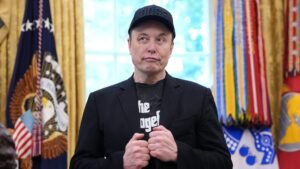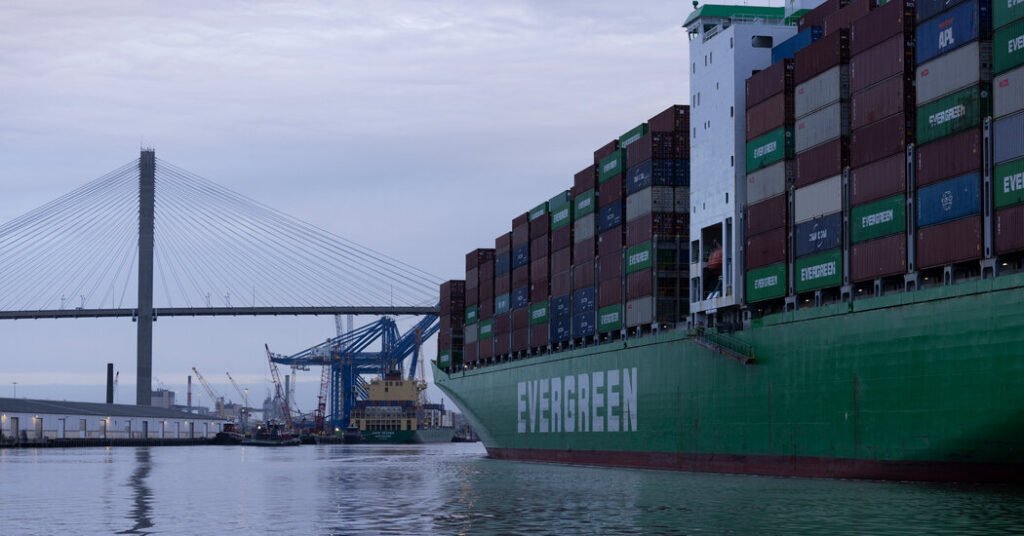

President Trump on Thursday set in motion a prepare for new tariffs on other countries internationally, an ambitious move that might shatter the guidelines of international trading and is likely to trigger furious negotiations.The president directed
his consultants to come up with brand-new tariff levels that consider a variety of trade barriers and other financial approaches embraced by America's trading partners. That includes not just the tariffs that other countries charge the United States, but likewise the taxes they charge on foreign items, the aids they provide their industries, their exchange rates, and other habits the president considers unfair.The president has stated the action was needed to even out America's “unfair”relationships and stop other nations from taking advantage of the United States on trade. However he explained that his ultimate goal was to force business to bring their manufacturing back to the United States.”If you build your item in the United States, there are no tariffs,”he stated throughout remarks in the Oval Office.Howard Lutnick, the president's nominee for commerce secretary, said the procedures could be ready as soon as April 2.
He will oversee the strategy along with Jamieson Greer, Mr. Trump's pick for trade agent, if they both are validated to those posts, and other advisers.The decision to revamp the tariffs that America charges on imported products would represent a significant overhaul of the worldwide trading system. For years, the United States has
set its tariff levels through negotiations at international trade bodies like the World Trade Organization.Setting brand-new levies– most likely to be greater than what the United States charges today– would successfully scrap that system in favor of one identified exclusively by U.S. authorities and based upon their own criteria.Timothy Brightbill, an attorney at Wiley Rein, said an approach a reciprocity-based tariff system would be “an essential change to U.S. trade policy, and among the greatest in more than 75 years– given that the creation of the present multilateral trading system,”in 1947.
Chad Bown, a senior fellow at the Peterson Institute for International Economics, stated Mr. Trump's tariffs would break W.T.O. guidelines in 2 ways. Using various tariff rates to various countries would violate a dedication by W.T.O. members not to discriminate against one another. And if the United States raises its tariff rates beyond the maximum rate it has negotiated with other members, that would break trading guidelines, too. “A decision to unilaterally increase U.S. import tariffs, product by item, country by country, would be President Trump's biggest blow yet to the rules-based trading system,”Mr. Bown said.The action seems likely to begin extreme settlements with governments whose economies depend upon exports to the United States. It might likewise generate trade wars on several fronts if other countries pick to increase their own tariffs in retaliation.Business groups provided careful declarations, saying that they supported fairer trade, however urging the administration to wind up lowering tariffs globally, instead of raising them. A White Home official, who did not have consent to speak for attribution, stated in a call with press reporters on Thursday that other nations would be provided the chance to work out on the levies they will face.Nearly every nation would be affected, but the move might have particularly considerable repercussions for India, Japan and the European Union.Speaking at a joint news conference with Prime Minister Narendra Modi of India later on Thursday, Mr. Trump stated that at the end of his very first term, he” wasn't truly in the state of mind”to enforce mutual tariffs.”We felt that now it was finally time after 45 or 50 years of abuse,”Mr.
Trump stated. He included,” I had conversations with India in the very first term about the reality that their tariffs were actually high and I wasn't able to get a concession.”
Relating To Europe, Mr. Trump and his staff members have actually consistently indicated the value-added tax as an extra oppression on top of tariffs. Peter Navarro, the president's senior counselor for trade, called the European Union's VAT the”poster kid” for unfair trade toward American service, saying that such treatment had enabled Germany to export to the United States sometimes the variety of cars that it purchased from it. “President Trump is no longer ready to tolerate that, “Mr. Navarro stated.” The Trump reasonable and mutual strategy will put a quick end to such exploitation of American workers.
“The European Union needs a standard value-added tax rate on a lot of goods and services, and while the rates vary by nation, they average about 22 percent across European countries. The tax is used at each stage in a supply chain, and the expense is typically borne by the end consumer.The United States is an outlier among advanced economies in not imposing a value-added tax on items like cars.Mr. Trump's proposal represents a considerable reversal in a decades-long push in trade policy toward lowering international barriers. While previous presidents have actually typically worked out with foreign nations over tariffs, those contracts have normally led to lower levies, not greater ones.Mr. Trump did acknowledge that his reciprocal tariff strategy could lead to prices going up. That's because consumers tend to pay higher costs when items are taxed at a higher rate. But in his Oval Office remarks previously on Thursday, the president stated that any increase would be brief which his strategy would lead to more tasks. “Prices might increase rather short-term, however rates will likewise go down.”In the long term, he said, it's going to”
make our country a fortune.”The reciprocal tariff strategy is the most recent relocation by Mr. Trump to penalize allies and foes alike with an amazing variety of trade actions.The United States imposed an extra 10 percent tariff on all products from China last week, and came within hours of putting sweeping tariffs on Canada and Mexico that would have brought U.S. tariff rates to a level not seen considering that the 1940s. The president had actually slammed Canada and Mexico over drug and migrant crossings into the United States, however agreed to put off the tariffs for one month after the countries offered him some concessions. On Monday, the president signed a proclamation imposing 25 percent tariffs on all foreign steel and aluminum. Mr. Trump said his advisors would also fulfill over the next four weeks to discuss procedures on vehicles, pharmaceuticals, chips and other goods.Reciprocal tariffs will likely expand Mr. Trump's trade fight to a lot more nations. It stays to be seen whether the president utilizes the technique to significantly raise U.S. barriers to imports, or as a lever to extract concessions from nations that end up opening foreign markets.The White House said the president could draw on numerous legal authorities to issue the tariffs, including Section 232, which connects to national security; Area 301, which relates to unreasonable trading; and the International Emergency Situation Economic Powers Act.The official said that Mr. Trump was not dismissing a further”universal”tariff later to minimize the U.S. trade deficit, however that for now the president had picked to pursue reciprocal treatment.Mr. Trump floated proposals in his first term and his 2024 project for making trade more reciprocal by matching the tariff rates that countries impose on American products.He has frequently pointed to America's lower tariff rate as evidence the country is being capitalized
of. The United States has a typical tariff rate of around 3 percent, lower than other nations, but still approximately in line with those of Canada, Britain, Japan and the European Union. Worldwide, rich countries tend to have lower tariff rates, while poorer nations have negotiated higher ones, to secure their
less developed industries and subsistence farmers.But Mr. Trump has criticized other nations for charging greater tariffs on certain American items than the United States charges them. For instance, he has actually indicated the 10 percent tariff that the European Union charges on American automobiles, versus a 2.5 percent tariff for cars and trucks offered in the other direction.The United States has actually set its tariff rates for imports lower than that of some trading partners, since for decades U.S. officials were encouraged of the advantages of freer trade. They thought lower tariffs would enable the United States to import low-cost products for U.S. customers and raw materials for its factories, sustaining the American economy.Pat Toomey, a former Republican senator from Pennsylvania and a kept in mind totally free trader, said the president's strategy would mean the United States was just taxing its own consumers more, reducing their standard of life, and making American makers less competitive. “The reasoning of mutual tariffs is, if another nation punishes its customers, we have to punish ours, “he said.Mr. Trump's views vary. He argues that equating to out American tariff rates is vital to bring back U.S. production, which greater tariffs will reduce the trade deficit. Some financial experts disagree, arguing that movements in currency could balance out any impacts on the trade deficit.Economists and historians
also say that the varying tariffs that nations place on one another's products are not evidence of discrimination. Rather, they reflect the priorities that each government had when it consented to optimum tariff rates in negotiations with other members of the World Trade Organization.Those negotiations offered governments the opportunity to fight for higher tariff rates on markets they wished to secure, and accept lower tariff rates on products they were most likely to import.In the United States, for instance, authorities negotiated
greater tariffs on wool sweaters and shoes to secure American producers at the time, stated Inu Manak, a trade professional at the Council on Foreign Relations.Other countries safeguard their industries, too, she stated, but wish to keep tariffs low”so that their customers and manufacturers have access to a broad choice of products at the most
competitive rate. “Douglas Irwin, a teacher of economics at Dartmouth College, said that nations had come out of The second world war with wildly various tariff codes. When trade negotiations began in 1947, nations cut tariffs piecemeal. In the 1960s, lots of countries consented to decrease all tariffs, however there was no effort to match them on specific
items.”Reciprocity in this case was'let's all cut by about the very same amount' not' let's match our tariffs on an item by item basis, ‘which seems to be what the Trump view of reciprocity ought to be,”he said.If these tariffs violate W.T.O. rules, other members of the W.T.O. could challenge them.
But the panel at the W.T.O. in charge of fixing such conflicts was effectively neutered in the very first Trump administration when the United States declined to designate anymore members to it. The Biden administration continued that policy.Jeanna Smialek and Zolan Kanno-Youngs contributed reporting. Source