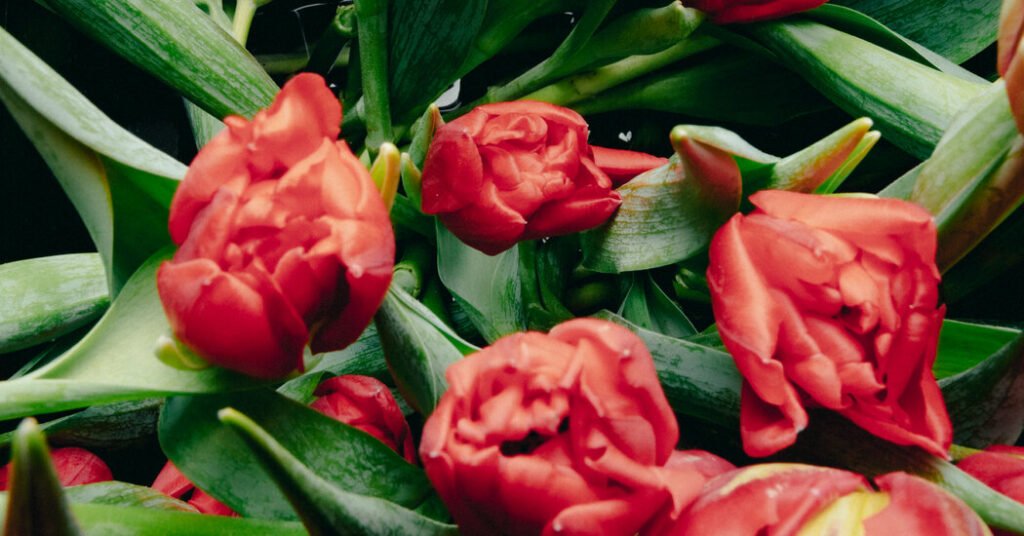

For the past 5 years, Molly Culver, owner of Molly Oliver Flowers in Brooklyn, has actually installed a quiet fight versus the goliath of Valentine's Day flowers: the rose. Classically red, multilayered, irritable and velvety, countless roses, a lot of imported from abroad, will be cost the yearly day of love. But Ms. Culver is among the growing variety of floral designers and flower enthusiasts who would like to know: Would you think about tulips instead?Consumers in the United States are expected to invest nearly$3 billion on flowers for the vacation this year, according to the National Retail Federation. Most of that will be spent on roses, however there are indications that the tulip, more frequently related to spring and Mom's Day, has actually emerged in the last few years as a surprising and more sustainable alternative.At UrbanStems, an online flower seller, the option of tulips in February is “capturing on really quick, “stated Meenakshi Lala, the primary executive.UrbanStems, which began providing tulips for Valentine's Day in 2021, expects to sell two times as lots of tulips this Valentine's Day as it did in 2015.”We are expecting to reach upwards of 4,000 tulip orders this Valentine's Day cycle,”she stated, noting that the cycle is”generally 6 to 7 days.”And while that number is overshadowed by the number of roses the business expects to offer (1.8 million stems), it's not precisely a fair
comparison. UrbanStems uses roses of various rates and arrangements, nearly the way a painter would use a shade of blue. But the tulip bouquets are simply that– exceptional tulips.Tulips also tend to be more economical than roses. At a Trader Joe's in New York on the day before Valentine's, a bouquet of 20 tulips costs$12.99, while a dozen roses were$14.99.
At POSY, a New york city City-based flower style studio, a plan with 30 tulips can choose$ 100 and an arrangement of 24 red roses is priced at$175. That relative cost might have something to do with the appeal of tulips beyond Valentine's Day: They are the most-purchased flower in the United States. Florists tend to be enthusiastic about the Valentine's tulip trend, both for visual and ecological reasons.Unlike roses, tulips continue to change and grow after they're cut. Ms. Culver said there was poetry in the way tulips moved with the sun from within their vase, taking the shape of whatever vessel contained them as they unfurled to flaunt their elegance.”I personally will watch tulips until the last petal drops,”she said.Like red roses, which symbolize love, tulips have their own symbolic significance. In the language of flowers (used in Victorian England as a form of coded interaction), tulips signified enthusiasm, according to the Smithsonian Gardens. The Society of American Florists further offers meaning to the flower based on its color. A pink tulip is for caring, while purple represent royalty and red is a statement of love. The flower's expansive meanings aid with its Valentine's Day appeal. The holiday is no longer just for enthusiasts, but a day to celebrate all type of love– pals, household and even animals.”Roses are about sex,”said Andrew Miller, the owner of Tulip
Valley Farms in Washington State, however tulips have”the meaning that we choose to give it.””I can give tulips to a buddy of mine that, you know, we go searching together, “he said.Allan Visser, a third-generation tulip farmer in the Netherlands, marked off the various upsides to the flower: They can be found in a variety of colors and shapes; they're more sustainable due to the fact that they can be grown more quickly, with less heat for shorter time periods so even greenhouses utilize less energy than they would for roses. Worldwide, there's a growing demand for tulips, Mr. Visser said, keeping in mind that every year more tulip bulbs make their way to the United States from the Netherlands( where the bulk of the world's tulips are grown)for vacations like Valentine's Day, Mom's Day and Easter. A tulip is simply aesthetic, unlike flowers that can be utilized for their fruit or medicinally, said Ibo Gülsen, managing director of IGMPR, a shop firm that develops and develops flower attractions around
the world, and chairman of the World Tulip Society.It's a custom that goes back countless years, he said, keeping in mind that while the Dutch are”
now masters in tulip horticulture, “it was the Ottoman Empire that” set the requirement”for tulip appreciation.Mr. Gülsen stated the tulip had long represented the start of a cycle, fertility and spring– styles that echo the ancient Roman origins of Valentine's Day, and so it”makes good sense to use a spring flower to celebrate that.”Dorothy Smith, 34, stated she invested a”substantial amount of my non reusable income “on a subscription for flower deliveries. When she registered in 2020 for Molly Oliver Flowers ‘service, Ms. Smith was engaged. She later wed– and then separated. It can make holidays like Valentine's Day hard, she stated, however she still has her fresh flowers.”Today, especially, I was really excited to have these really, truly unique tulips in my house,”she said, including that she was thinking about taking the flowers(in pottery she made)to the Valentine
‘s Day celebration for female good friends only called Galentine's Day.”I want I had more tulips to offer, “she stated, adding that”they feel sculptural nearly”and”more special to me than a red rose.”At Southside Blooms, a flower not-for-profit in Chicago that frequently utilizes at-risk youths and prefers “eco-friendly practices,”in your area grown tulips have actually been on the Valentine's Day menu for a minimum of three years.Natalie Ransom, a flower shop and the head of events at Southside Blooms, said the shop grew more tulips every year to fulfill the increasing needs of its customer base. Southside is growing 30,000 tulips this season, she said, and anticipates to utilize more than 1,000 on Valentine's Day alone.”It's just a great spring flower, specifically during this time of year, where it's chilly and kind of bleak, “she stated. Source