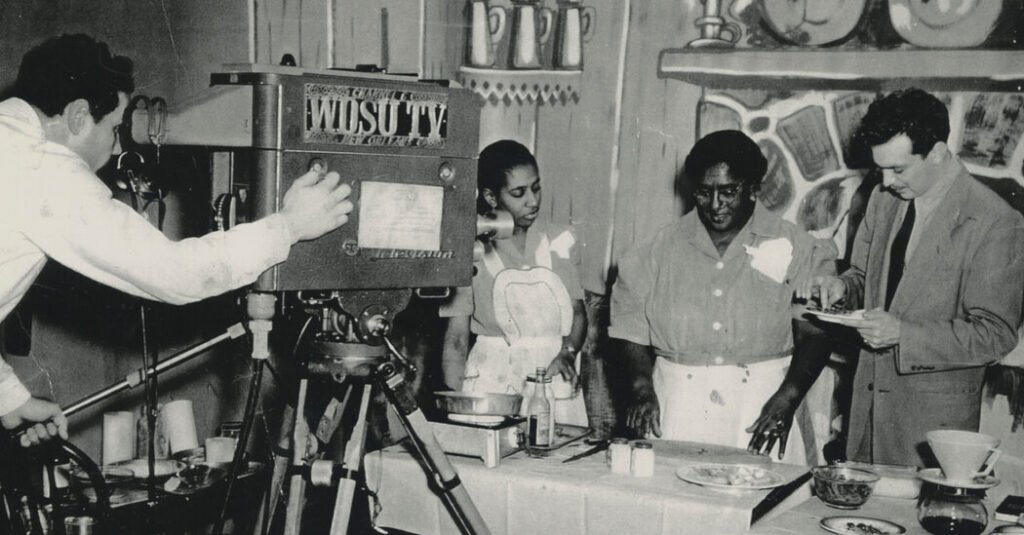

Cook Book, “on WDSU-TV, cameramen pressed past one another for leftovers. Audiences moved from sofa to kitchen area, measuring, chopping, boiling and frying, including a little pinch of this, replacing a little dash of that.During the Jim Crow period, when domestic work was the main form of employment for Black females,
Richard found a measure of fame as a champ of Southern food, and in particular Creole cooking– a combination of mostly French, Spanish, West African and Native American ingredients and methods that originated in New Orleans and typically consists of a roux(a mix of flour and fat utilized as a thickening representative)and a” holy trinity” of onions, bell peppers and celery.Not only was Richard the first Black person to host a television cooking show and to compose a Creole cookbook, however she also owned 3 popular dining establishments, established a line of frozen foods, and founded a catering company and cooking school, according to the historian Ashley Rose Young.”She was a business owner who developed an organization despite structural barriers in place,” Young, who once worked for the Smithsonian National Museum of American History's Food History Job, said in an interview.”How did she protect loans? How did she protect the lease for her dining establishment organization? We don't understand.”Young has been searching for ideas to Richard's life– photographs, correspondence, company arrangements, journals– which have actually been lost to relocations, incidents and misconceptions.(No recordings are understood
to exist of her 30-minute cooking program, which was seen two times a week, on Tuesday and Thursday nights, in 1949 and 1950.)And she has been partnering with Paula Rhodes, Richard's granddaughter, to assemble a biography.Rhodes, a human rights lawyer who was 1year old when Richard died, said she was impressed by her grandma's capability to carve out a career.”She was a dark-skinned Black female,”she stated in an interview.” Colorism was front and center in New Orleans, not just from the white neighborhood however within the Black neighborhood. If you were lighter than a brown supermarket bag, you could have certain opportunities. She didn't meet those requirements.”Lena Richard, who was baptized Marie Aurina Paul, was born upon Sept. 11, 1892, in New Roads, La., about 100 miles northwest of New Orleans. Census records show that she was among 10 children of Jean-Pierre Paul, a farmer, and Françoise Laurent, who prepared for the New Orleans garter producer Nugent Vairin and his partner, Alice,
and their 5 children. The Vairins hired Lena to prepare for them when she was a teen, and she prepared lunch before graduating to more intricate dinners and events.Richard's sardine and egg sandwich recipe on NYT Cooking.Lena's company, recognizing her early culinary skill,”told me that I could go to the store and choose any sort of cooking utensils
that I desired, “Richard said in a declaration discovered in the archives of the Colonial Williamsburg Structure,”and that she was going to offer me cooking lessons and send me to cooking schools and every presentation. If no other colored lady might get locations, I definitely could.” “She was very fortunate that she was championed by the white individual for whom she cooked,” Jessica B. Harris, a historian and the author of” High on the Hog: A Cooking Journey From Africa to America “(2011 ), said in an interview, adding,”Had that not happened,
her talent might never ever have had a chance to be established.
“In 1918, Richard was sent to Fannie Farmer's School of Cookery in Boston.”When I got up there, I found out in a hurry they can't teach me much more than I know,” she told The New York Herald Tribune in 1939.”I discovered aspects of new desserts and salads, but when it pertains to cooking meats, stews, soups and sauces, we Southern cooks have actually Northern cooks beat by a mile.”When she returned to Louisiana, Richard started working
for herself, catering parties, wedding events and debutante balls. Her husband, Percival Richard, whom she had actually married in 1914, handled maintenance duties for her. In 1937 she developed a cooking school, where she checked her dishes and provided Black trainees with the skills to open their own organizations. Amongst her specializeds were crawfish bisque, turtle soup, potato pancakes, stewed eggs and oysters, a 16-pound fruitcake, and lamb chops with pineapple.She started getting so many ask for her recipes that she published”Lena Richard's Cook Book”in 1939. (It was later on republished as”New Orleans Cook Book.)
The book– devoted to Alice Vairin, who had died in 1931– included standard recipes from other Black cooks who affected Creole cuisine.Richard dictated more than 300 dishes, menus and cooking ideas to her daughter, Marie, who wrote them down and after that passed them on to a typist. To pay the printer, Richard held cooking demonstrations. She visited the nation to promote her cookbook, offering 700 copies priced at$2 each in one month. The book surpassed Southern cuisine to include recipes for chocolate waffles, asparagus sandwiches and tea dainties.” Her dishes are not only Creole but for tea ceremony and other events,”the chef and TV character Carla Hall stated in an interview, adding,”If she wanted to strike a truly large market with her cookbook, she ‘d have to consist of components that individuals were familiar with.
“Richard rapidly catapulted to fame in the cooking world. She was hired as the head chef at the Bird and Bottle Inn in Fort, N.Y., and at Travis Home in Colonial Williamsburg, Va.In 1945, she established her frozen food company, delivering stews, okra gumbo and other meals from New Orleans to New York City, California and Panama.”Black middle class constantly indicated you were one paycheck away from poverty, “Rhodes said, however Richard” was a great businesswoman. She was constantly searching for methods to make money.” In 1949 Richard opened Lena Richard's Gumbo House throughout the street from a white area. Called Mom Lena to her customers, she served 54 gallons of gumbo a week on 12 tables covered with white tablecloths and, defying partition laws, served Black and white patrons,
consisting of the white priest and parishioners from the neighboring Holy Ghost Catholic Church.On Sunday, Nov. 26, 1950, Richard attended mass, then went to her restaurant to meet a devotee who had flown in from Los Angeles and purchased every product on the menu. After a long day, Richard experienced sensation unhealthy and returned to her home in New Orleans.
She passed away there of a cardiovascular disease early the next early morning. She was 58. Richard's tradition was bequeathed to Dee Lavigne in 2022, when Lavigne became the 2nd Black woman in New Orleans to open a
cooking school.Richard's legacy survives on: In 1940, Houghton Mifflin republished her cookbook as” New Orleans Cook Book, “and the chef
Terri Coleman has actually been cook ing her method through it on YouTube and TikTok.” She appeared like a lady that just kept going,”Coleman said in a Zoom interview.”
She didn't take no for a response, and she did what she wished to do. Lena Richard is very much alive with us due to the fact that we are utilizing her recipes.”Source