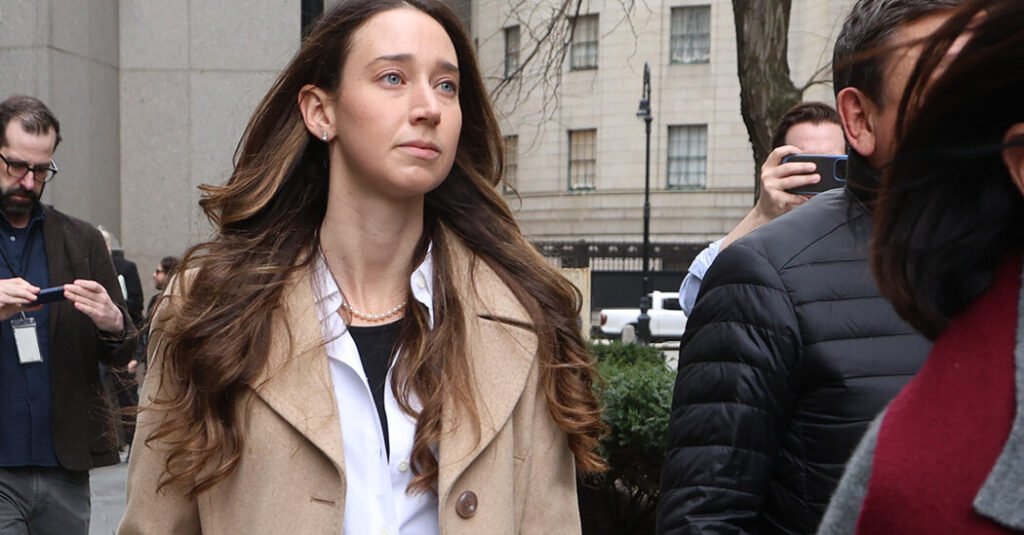

Charlie Javice, who made big headlines in 2023 when JPMorgan Chase implicated her of faking her start-up's client list, was found guilty in federal court Friday of three counts of fraud and one count of conspiracy to commit fraud.She now faces the possibility of decades in prison.The bank has its own civil lawsuit on standby as it tries to claw back a few of the$175 million it spent for her business, Frank. It sued her three years back, and Ms. Javice was detained at Newark Liberty International Airport not long after that.Frank, which was established in 2016, aimed to assist customers complete the Free Application
for Federal Trainee Aid at a time when the FAFSA was notoriously complicated. Ms. Javice, 32, quickly ended up being a go-to quote for journalists writing about spending for college and turned up on lists of under-30 and under-40 up-and-comers. Not long after Ms. Javice sold Frank to JPMorgan, there was problem. The bank ran a test of Frank's consumer list, hoping to encourage its young clients to open Chase accounts. Of 400,000 outgoing e-mails, simply 28 percent showed up successfully in an inbox.At trial, a bank executive said that it had opened simply 10 accounts through the Frank list.
It was, as the bank put it in its own legal filing, “devastating. “An internal examination took place, and the bank declared to have actually discovered evidence that Ms. Javice and Olivier Amar, Frank's primary development and acquisition officer, had actually faked
much of its customer list. JPMorgan sued her, and the federal government followed with its own charges, which led to the verdict Friday.Mr. Amar was charged and tried at the
same time as Ms. Javice and was likewise condemned on all counts. A JPMorgan spokesperson decreased to comment on the verdict.During the trial, JPMorgan bank executives stated that one appeal of Frank was its guarantee of over four million clients, with comprehensive contact information, whom the bank could pitch. The bank might hook young adults with a bank account and potentially keep them and their company through years of mortgages and retirement savings.One striking little bit of testament originated from Adam Kapelner, an associate professor of mathematics at Queens College, part of the City University of New York City. As JPMorgan was carrying out due diligence, Ms. Javice told him she was in an”urgent pinch “and asked him to utilize”synthetic data”to produce a list of over 4 million customers from a Frank list she supplied, which had fewer than 300,000 people on it. He asked why, according to his testament, but she would not inform him.”I discovered my genius,”she said in a text to Mr. Amar at the time.After Professor Kapelnerdid some quick work– including pulling an all-nighter– Ms. Javice asked him to get rid of any specifics about the information from his billing and paid him$18,000 rather of the$13,300 on his initial bill.According to district attorneys, Ms. Javice and Mr. Amar knew and feared that the bank was going to utilize Frank's list for marketing. The set eventually bought genuine names and e-mails from business information suppliers to make it appear like Frank really did have millions of customers who had actually given the company their names and contact information.This, too, was a rush task to prevent getting caught, according to the prosecution. It produced a text message exchange in which Mr. Amar told Ms. Javice,”You'll have 4.5 million users today.”She replied,”Perfect. Love you.”Ms. Javice requested for specifics to be eliminated from a billing on this deal as well.To the prosecution, this was evidence that Ms. Javice was trying to conceal her tracks.”Why would you make a fake client list if you weren't lying about your clients?” Micah F. Fergenson, an assistant U.S. attorney, said in court Wednesday. Source