
The tariffs on cars and auto parts that President Trump announced on Wednesday will have far-reaching effects on car manufacturers in the United States and abroad.But there will be
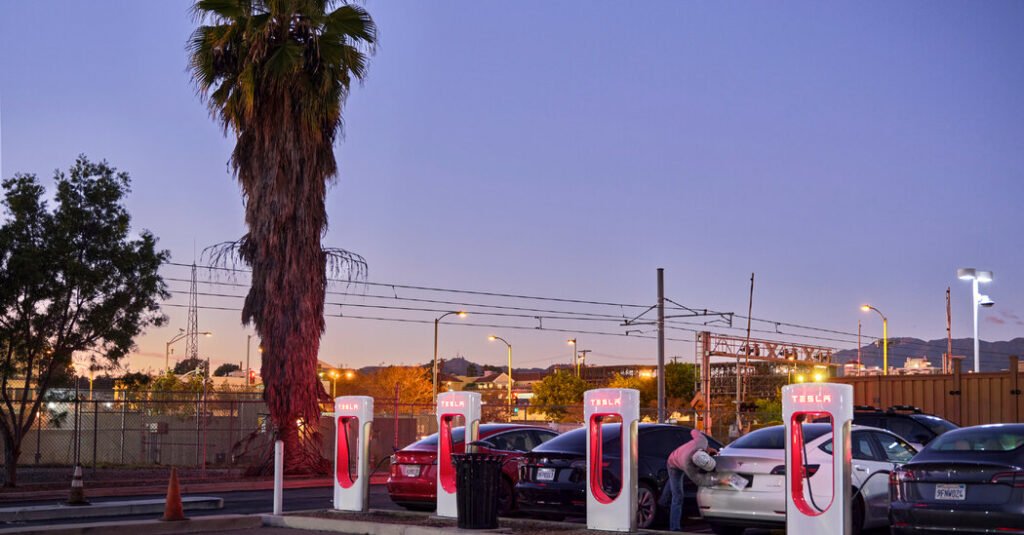
important distinctions based on the scenarios of each company.Tesla The company run by Mr. Trump’s confidant, Elon Musk, makes the vehicles it offers in the United States in factories in California and Texas. As a result, it is maybe the least exposed to tariffs.But the company does buy parts from other countries– about a quarter of the components
by value in its cars originate from abroad, according to the National Highway Traffic Security Administration.In addition, Tesla is dealing with falling sales all over the world, in part since Mr. Musk’s political activities and statements have switched off moderate and liberal car purchasers. Some nations could look for to retaliate versus Mr. Trump’s tariffs by targeting Tesla. A couple of Canadian provinces have actually currently stopped providing incentives for purchases of Tesla’s electrical vehicles.General Motors The biggest U.S. car manufacturer imports much of its best selling and most successful cars and trucks, particularly from Mexico, where it has several big factories that churn out models like the Chevrolet Silverado . Approximately 40 percent of G.M.’s sales in the United States in 2015 were cars put together abroad. This could make the company susceptible to the tariffs.But unlike some other automakers, G.M. has actually posted strong revenues over the last few years and is thought about by experts to be on great financial footing. That might help it weather the tariffs much better than other business, specifically if the import taxes are eliminated or diluted by Mr. Trump.Ford Motor Ford is much less reliant on imported vehicles than a lot of its rivals. It makes about 80 percent of the vehicles it sells in the United States in the nation. As a result, it would be relatively insulated from the 25
percent tariffs on imported vehicles.But the company is still dependent on foreign factories for major parts like engines. A Ford factory in Ontario, for instance, makes engines for some of its pickup trucks. Ford has been losing billions of dollars on electric lorries. One of its three battery-powered designs, the
Mustang Mach-E, is produced at a factory near Mexico City.Stellantis The business that owns Chrysler, Dodge, Jeep and Ram, utilizes abroad factories, in Mexico in specific, to assemble some popular models like Ram pickup. Another model, the Chrysler Pacifica minivan, is made in Ontario.Stellantis, which was developed by the 2021 merger of Fiat Chrysler and Peugeot, has actually also been fighting with sluggish sales and is searching for a brand-new chief executive. Those obstacles put the company, along with some others like Nissan, at greater threat, especially if the tariffs remain in place for months or years.Toyota Like other Japanese automakers, Toyota is really dependent on the United States and sold 2.3 million cars in the nation last year. About one million of those lorries were made in other countries, a number of them in Canada, Mexico and Japan. That could be a big issue for the business and automakers like Subaru and Mazda, with which Toyota works closely.But Toyota, the world’s biggest car manufacturer, isin a much better position than other automakers. It pays and thought about by experts to be one of the best-run business in the global car industry.Volkswagen Europe’s largest car manufacturer could be really injured by tariffs due to the fact that it has simply one factory in the United States, in Chattanooga, Tenn., where it makes the Atlas and ID.4 sport energy lorries. It imports a number of its automobiles, including Audis and Volkswagens from Mexico and Porsches from Germany.The company has actually struggled economically in recent years since its sales have fallen dramatically in China, where domestic automakers have actually grown rapidly by introducing great deals of budget-friendly electrical and hybrid vehicles. Volkswagen had wished to make inroads in the United States, but Mr. Trump’s newest tariffs could make that uphill struggle even harder.Hyundai and Kia The South Korean stablemates have made excellent sales gains in the United States in recent years. The companies have also purchased a brand-new electrical automobile
factory in Georgia that is starting to increase production, which might help them prevent tariffs on some models.On Monday, Hyundai’s executive chair, Euisun Chung, announced at the White House with Mr. Trump that his business would invest
another$21
billion in the United States, including in a brand-new steel factory in Louisiana. Although Hyundai and Kia now have three factories in Georgia and Alabama, they will not be able to prevent tariffs on the hundreds of thousands of cars and trucks they import into the United States. Much of those lorries originated from South Korea, which worked out a trade arrangement with the United States in 2007 that was updated throughout Mr. Trump’s very first term.